
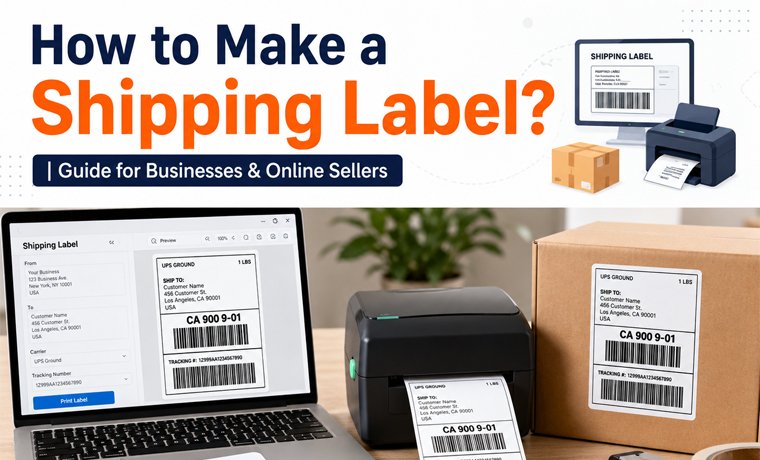
A shipping label is the single most important element of any shipment, as it tells carriers where a package is going and how it should be handled, as well as helps keep the parcel trackable.
Understanding shipping labels means knowing how shipping labels work and how to design or size them correctly, which can save businesses time, money, and customer trust. A 100% accurate label prevents misrouted deliveries, avoids returns, and eliminates unnecessary shipping fees. No doubt - from standard shipping labels to specialized hazard shipping labels - every piece serves a distinct purpose.
In this guide, you’ll learn exactly how to make a shipping label, what information is required, the standard shipping label size, how prepaid labels work, and best practices.
What Information Is Required on a Shipping Label?
Sender (Return) Address: The sender address identifies where the package originated and where it should be returned if delivery fails. Moreover, it is typically provided in the top-left corner of the labels.
- Recipient (Delivery) Address: The delivery address must be detailed and include the recipient’s full name, street address, city, state, and ZIP code. Adding a nearby landmark can also be a big help.
- Package Weight & Dimensions: Carriers calculate shipping costs using weight and size, which is why you must mention each correctly. Incorrect measurements can cause overcharges or rejected shipments.
- Shipping Method and Service Type: This tells the carrier how fast the package should travel or the level of urgency. Ground, priority, express, or international services need to be clearly marked on the label.
- Tracking Number and Barcode: The barcode allows automated scanning throughout transit, while the tracking number enables shipment monitoring. Clear, scannable barcodes are essential.
How Do Shipping Labels Work?
Many new sellers often ask, "How do shipping labels work?"
For transportation companies, shipping labels serve as machine-readable directives. Be it circle labels or rectangular. A label is given a distinct tracking number and barcode after it is printed. Scanners read the barcode at several stages during the delivery process.
The barcode enables carriers to:
- Monitor the movement of packages
- Check the shipment information
- Route packages correctly
- Update the status of the delivery
- Verify the final delivery
While guaranteeing that packages arrive at their correct location, this automated approach helps minimize human mistakes.
Types of Shipping Labels
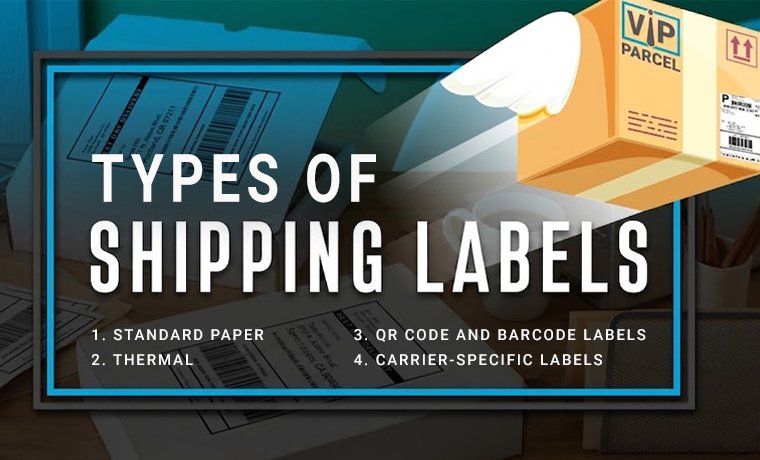
In simpler terms, a shipping label is just a type of legal document pasted on a parcel/box/package containing all the essential delivery information. Additionally, these labels are used by shipping companies like UPS, FedEx, USPS, and DHL to identify, classify, track, and deliver shipments all the way through the supply chain.
Here are the most commonly used options in terms of materials, purpose, design, etc.
Standard Paper Shipping Labels
These are printed using inkjet or laser printers and applied with adhesive backing. Such labels are widely used for low-volume shipping but require proper ink quality to maintain barcode readability during transit. For metallic labels, the paper variety will be changed.
Thermal Shipping Labels
Thermal labels are printed using heat, not ink. They are durable, smudge-free, and commonly used with 4 x 6 shipping labels, the industry-standard shipping label size for eCommerce and fulfillment centers.
QR Code and Barcode Labels
These labels store shipment data digitally, promising fast scanning and automated routing. Barcodes are paramount for tracking, while QR codes may store additional shipment or return information.
Carrier-Specific Labels (USPS, UPS, FedEx, DHL)
Each carrier has unique formatting and data requirements. Using carrier-approved templates ensures compliance and prevents rejected shipments.
Read More: How To Measure a Box for Shipping: Accurate Dimensions
How to Make a Shipping Label Step-by-Step
Creating a shipping label correctly ensures smooth delivery and accurate billing. Follow these steps carefully to avoid costly errors.
Pick Your Shipping Carrier:
Start by selecting a reliable shipping carrier for business labels that aligns with your delivery destination, budget, and timeline. Most common? USPS, UPS, FedEx, and DHL. These companies offer different pricing structures and transit speeds for maximum flexibility. Comparing carrier rates helps control costs while meeting customer expectations.
Provide Shipping Details:
Accurate shipping details are needed for successful delivery. It is advised to always double-check sender and recipient addresses, including ZIP codes. Besides, add precise package weight and dimensions to avoid carrier surcharges or delivery delays. Well, incorrect data can result in returned shipments or billing adjustments that increase costs and disrupt fulfillment operations.
Select Shipping Speed & Service:
Choose a shipping service that balances delivery speed with budget. Options range from ground shipping to expedited and overnight services.
Selecting the correct service promises that packages arrive on time without unnecessary expenses. Additionally, clearly defined service levels help set accurate customer expectations and reduce post-shipment complaints.
Design the Label:
Once shipment details are confirmed, generate the label using carrier websites or shipping software. This step creates a scannable barcode and tracking number essential for package routing. Downloading labels digitally ensures consistency, accuracy, and easy reprinting if needed, reducing errors commonly associated with manual label creation.
Need a punch of sustainability or need to advertise your brand as green? Get Kraft labels for shipping boxes.
Print + Inspect
Print the label using the correct size and resolution to ensure barcode clarity. Now, inspect the color label for smudges, faded ink, or alignment issues before attaching it to the package. A clean, readable label prevents scanning errors, delivery delays, and lost shipments during transit.
How to Print a Shipping Label Correctly
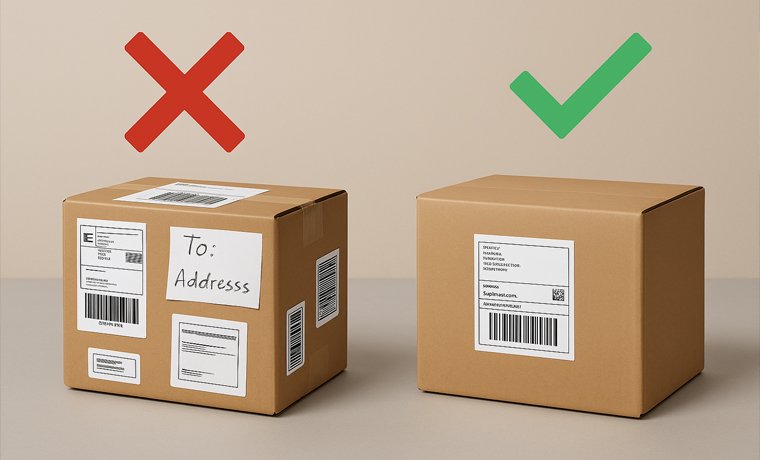
The quality of printing has a direct impact on the success of delivery. The size of the standard shipping label is always 4 x 6, and in this case, carrier compatibility is guaranteed. Barcodes should be printed at a high resolution to ensure their readability. It is important to handle labels correctly, not fold them, put them over the seams, or place the barcodes under the tape. With labeling, do not overlap at the edges and trim barcode areas.
Some of the common errors are faded ink, low contrast, and wrong sizing. These complications make the scanners unable to read labels, causing delays. Further, durability can be enhanced through the use of eco-friendly shipping labels that are printed using thermal printers to facilitate sustainability objectives.
Conclusion
Making a shipping label correctly is essential for efficient, cost-effective shipping. From understanding how shipping labels work to choosing the right size, format, and printing method, accuracy matters at every step. Proper labeling reduces delays, prevents returns, and improves customer satisfaction.
At Custom Product Packaging, we provide high-quality shipping labels, shipping caution labels, and eco-friendly shipping labels tailored to your business needs. For expert guidance or custom packaging solutions, call 888-385-1812 and ship with confidence every time.
Frequently Asked Questions
Handwritten labels are allowed but not recommended. They increase the risk of errors and scanning failures.
The standard shipping label size is 4 x 6 inches, accepted by all major carriers.
No, shipping labels are single-use. Reusing them can cause misrouting and delivery failures.
Yes, many carrier-generated labels expire if not used within a specific timeframe.