
Soy-Based Ink with Pros & Uses (A Sustainable Choice for Printing)
September 30, 2026
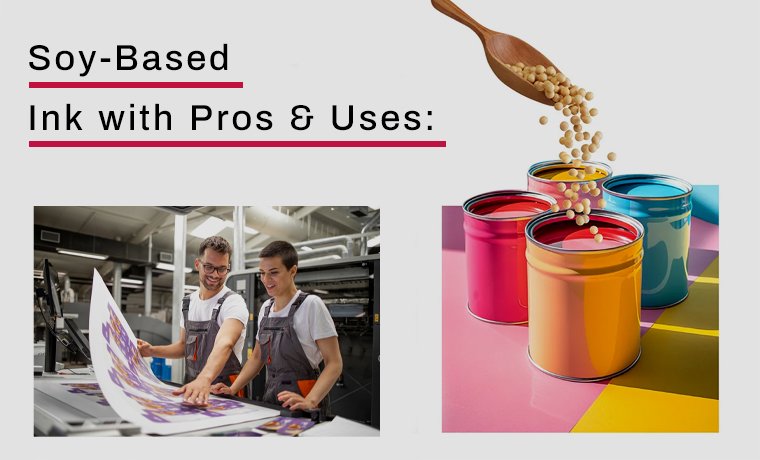
In today's growing eco-conscious demand, businesses across many industries are concerned about sustainability. This concern extends to printing and packaging. Customers no longer just ask about the product—they ask, ‘Is it safe? Is it sustainable? That's where soy-based ink printing comes in.
Derived from renewable soybean oil, soy ink offers a greener alternative to petroleum-based inks. But do you know its benefits? Well, it goes far beyond environmental impact. Just think sharper colors, better recyclability, and safer workplaces!
Let’s look into the science, perks, and uses of soy ink. We will also see why it’s becoming the gold standard in sustainable printing.
What is Soy-Based Ink
Soy-based inks are a type of printing ink made from soybean oil that produces vibrant colors and helps make paper easier to recycle. How? It is because the soy oil can be easily separated from the paper during the de-inking process. Moreover, it serves as a more environmentally friendly alternative to petroleum-based inks.
Quality of Soy Based Ink Printing:
Beyond environmental advantages, soy ink delivers exceptional print performance. If you are confused about the myth that it is eco-friendly and lower quality, that's not true for soy ink. Many printers and designers prefer soy-based ink printing because:
- It gives bright designs.
- It offers sharper detail and better transparency.
- It’s compatible with most commercial printing processes, including offset and flexography.
Real-world use: The New York Times and National Geographic have used soy inks for decades. This is the proof of eco-friendly printing inks showing professional-grade results.
Most Common Uses:
Soy-based ink printing is making its mark across industries that favor sustainability.
| Industry/ Use | Why Soy-Based Ink Works Well |
| Packaging | Ideal for food, cosmetic, and pharmaceutical packaging due to its non-toxic and eco-friendly properties. |
| Newspaper & Publications | Widely used in newspapers and magazines that are seeking greener and more sustainable printing alternatives. |
| Marketing Materials | Perfect for brochures, flyers, and business cards where high color quality and environmental responsibility are important. |
| Children’s Products | A safer choice for children’s books and toys because soy-based inks are non-toxic and environmentally friendly. |
| Labels & Stickers | Provides bright and high-quality colors for product labels while being safer for food-contact surfaces. |
| Greeting Cards & Stationery | Produces vibrant and crisp prints while keeping paper recyclable and reducing chemical exposure. |
| Books & Educational Materials | Safer for children and environmentally conscious readers; improves recyclability. |
| Gift Wrapping & Packaging Paper | Enhances the visual appeal of packaging with rich colors while remaining eco-friendly. |
How is Soy-Based Ink Made?

The process of making soy-based ink involves converting soybean oil into an ink formulation.
Soybean Oil Extraction:
A comprehensive extraction procedure is the first step on the path to premium, environmentally sustainable soy-based ink. To increase the surface area for optimal yield, cleaned soybeans are first cracked and rolled into thin flakes. After that, an exceptionally efficient solvent extraction process is usually used to release the oil.
Furthermore, the resulting crude oil goes through a rigorous refinement technique, which involves several stages of purification, including bleaching and degumming. By doing this, contaminants are eliminated, providing the pure, natural oil needed to serve as the base varnish. Soy ink is a sustainable superstar in packaging printing because it is made from purified, low-VOC oil.
Modification and Formulation:
After extraction, the soybean oil is refined and blended with various ingredients to create a desired ink formulation. It depends on the ink’s intended properties and printing applications/
These modification ingredients may include:
- Resins
- Pigments
- Waxes
- Drying agents
- Other additives
Ink Mixing:
Mixing ink requires skilled chemical alchemy. First, premium pigments are carefully mixed with the modified soybean oil. In order to break down solid pigment particles and uniformly suspend them inside the oil and resin system, this key dispersion stage uses high-speed milling machinery like bead mills or three-roll mills. This thorough procedure delivers optimal colour strength and smooth flow while preventing flocculation.
Then, resins are included to regulate gloss and adherence, and specific additives promise quick drying and scuff resistance. Every batch of ink is guaranteed to have a uniform texture and flawless printing performance.
Testing and Quality Control:
Once the ink is prepared, it undergoes strict testing to verify that it meets the required standards for:
- Viscosity
- Drying time
- Color accuracy
- Printability
- Performance
If any parameter falls short, the formulation can be adjusted accordingly. Well, quality control also ensures the ink’s consistency throughout the production process.
Packaging and Distribution:
After passing all quality checks, the soy-based ink is packaged into containers appropriate for safe storage and transport. The finished products are then distributed to printing companies, manufacturers, and other end users for various printing applications.
Note: The specific steps and formulations used to produce soy-based inks may vary among manufacturers.
Pros of Soy-Based Ink
Here are the top reasons why soy inks are better than other options.
Renewable Resource:
Soybeans are grown every year, making soy oil a renewable and sustainable raw material. On the contrary, petroleum is a limited resource that requires intensive extraction and contributes to environmental depletion.
Lower VOC Emissions:
Volatile Organic Compounds (VOCs) can harm both human health and the environment. Soy-based inks emit fewer VOCs during printing, helping reduce air pollution and creating a safer workspace for press operators.
Easier Paper Recycling:
Soy-based inks are easier to remove from paper during the recycling process. This leads to cleaner, higher-quality recycled fibers, reducing the need for harsh chemicals in recycling facilities, making the process more efficient and eco-friendly.
Impressive Print Quality:
Soy-based inks produce sharper details and more dynamic colors compared to conventional inks. This makes them an amazing choice for packaging that demands to capture attention and stand out on retail shelves.
Cons of Soy-Based Ink

Soy-based ink is eco-friendly. However, it has some drawbacks you should keep in mind.
Higher Cost:
It is more expensive than traditional petroleum-based inks.
Slower Drying Time:
Some formulations can take longer drying times.
Modifications in Printing Operations:
It might call for changes to the printing process and equipment.
Limited Color Vibrancy:
Color may appear less bright on some types of paper, reducing print impact.
Is Soy-Based Ink Food Safe?
Soy ink itself is non-toxic. It is printed on the outer layer of food packaging. So, it can be safely used on approved packaging materials. Consider it as a key selling point for:
- Organic snack boxes
- Coffee bags
- Bakery wrappers
- Cosmetic tubes
Note: Look for certifications like FDA compliance or FSC (Forest Stewardship Council) to ensure full safety and sustainability.
Soy vs. Other Eco-Inks
Let’s compare soy inks with other eco-inks to see and understand their real value.
| Ink Type | Base | Biodegradability | VOCs | Recyclability | Food Safe |
| Soy-based | Soybean oil | Yes | Low | Excellent | Safe for food packaging, not for direct food contact |
| Vegetable-based | Linseed, canola | Yes | Low | Good | depends on formulation |
| Petroleum-based | Crude oil | No | High | Poor | Limited |
| Water-based | Water + resins | Yes | Lower | Good | Varies |
Conclusion
If you really care about quality, safety, and sustainability, then soy-based ink printing delivers the best. Its various environmental benefits and minimal environmental impact have put it at the top in sustainable printing. It offers professional-grade color and superb print clarity.
All you need to do is ensure regulatory compliance for food packaging. This can help you promote eco values and strengthen customer trust.
Ready to make your packaging more sustainable? Contact Custom Product Packaging’s experts today for a quote on your soy-based ink printing project. We truly understand the importance of nature-friendly concerns and value using soy-based inks in packaging solutions to support a greener future.
Need any help? Email us at orders@customproductpackaging.com. Or dial (+1) 888-511-0592.