What is Water-Based Ink? How It Works + Why It Matters in Printing
September 30, 2026
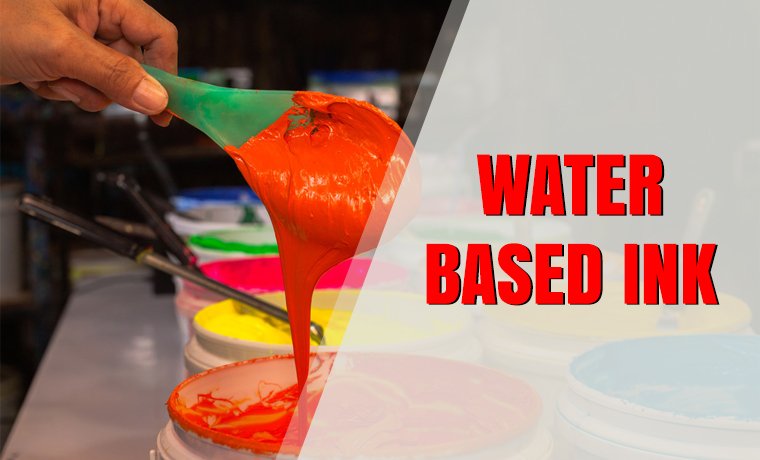
Printing has evolved from hazardous chemicals and strong solvent odors to something far more rational and ecologically sound. And in the middle of this glow-up? Water-based inks. In fact, this is what makes contemporary labels, T-shirts, and packaging feel smoother, safer, and more environmentally friendly.
Silently, water-based inks are emerging as the printing industry's MVP, because it does not have to be laid on top but absorbed by the substrate. The result? Vivid and fresh color. Breathable feel.
You can design anything with water based screen printing ink on your hoodie, a cereal box, the birthday party bags, and more. It is particularly important to take into consideration in 2026, when sustainability has ceased to be merely a buzzword but a business necessity.
What is Water-Based Ink?
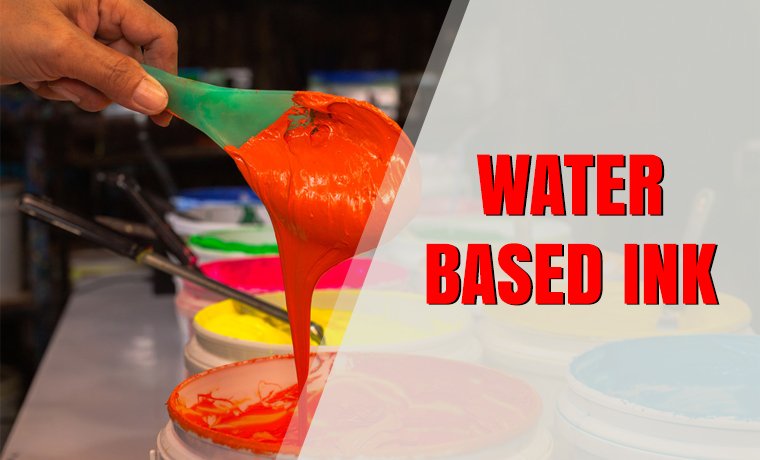
Simply, any ink using water as a solvent is considered to be water-based. Instead of using chemicals or plasticizers (that are of petroleum origin) to deliver the pigment, water plays the major role as a carrier. It results in extremely low volatile organic compounds (VOCs) emissions. Also, the print on the display boxes needs to be dried or heat-cured to become permanent.
After being sprayed onto a surface - be it fabric, paper, cardboard, or film - the water evaporates and leaves behind only the pigment that gets bonded with the substance. This is the complete opposite of plastisol, which is applied over cloth in the form of a rubbery film.
The best part is how it is compatible with a variety of processes, including screen printing, flexo, block, and digital.
A Balanced Composition
Each drop of water-based ink is a well-calculated formula. What's inside?
- Water (60-80%): The component that dissolves all the other solutions.
- Pigments: Colorants give hue and opaqueness, are finely ground, and come as organic or inorganic.
- Binders/Resins: Acrylics or polyurethanes that assist the pigment to stick once it has dried.
- Additives: Thickeners (control viscosity), defoamers (reduce bubbles), pH stabilizers (maintain ink stability), coalescing agents (help film formation), and drying modifiers (control evaporation speed) are used to refine performance.
Not only the viscosity and density of the ink, but also the performance of the ink on a particular material of custom shape boxes are directly impacted by the proportion of these ingredients.
How Water-Based Ink Works
Water-based inks work in a very civilized and straightforward manner. It demands no heavy chemical curing and gives off no toxic fumes. Just a clean drying process!
Here is the precise, easiest explanation:
- Ink = pigment + water + binders
- It gets printed on a surface
- Water evaporates (air or heat drying)
- Pigment stays locked in place
Now, get into the details…
3-Step Printing:
From application to final cure, water-based ink follows a clean, efficient path that ensures smooth adhesion and lasting results.
-
Ink Application:
A mesh screen, flexo plate, or roller is used to force ink onto the product (differs according to the method chosen). For example, in the case of water-based silkscreen ink, a squeegee is used to push ink through the open mesh of the stencil.
-
Absorption:
Water-based inks pass through the substrate instead of just sitting on top, in contrast to plastisol inks. For this reason, rather than feeling like a thick layer, designs feel lightweight, supple, and "part of the material”.
-
Water Evaporation:
Pigments and binders stay on the surface while the moisture evaporates, creating the print. The water evaporates due to heat or exposure to air. Because uneven or incorrect evaporation can have a direct impact on color uniformity, adhesion, and overall print quality, this step is critical.
Curing & Drying
Two of the highly popular questions in the industry are: how to cure water-based ink AND are how curing differs from drying. Remember, the designs that are not properly cured can get cracked, fade away, and bleed during the wash. Secondly, here is the difference:
Drying = water evaporation
Curing = binder film fully forming and bonding
-
Air Drying:
This is suitable for paper, labels, and a few of the packaging materials. In this method, ink is allowed to dry at room temperature. Meaning, it relies on natural evaporation, which is extremely slow but surely energy-efficient.
-
Heat Curing (Flash Dryer / Conveyor Dryer):
Suitable for textile/clothing, its necessary temperature range is usually ~149°C to 166°C (300°F to 330°F). Give it enough time so the entire ink layer reaches this temperature, and not just the surface. You will find this process great for strong adhesion, wash resistance, and long-term durability.
Why Everyone in Printing Is Switching to Sustainable Inks
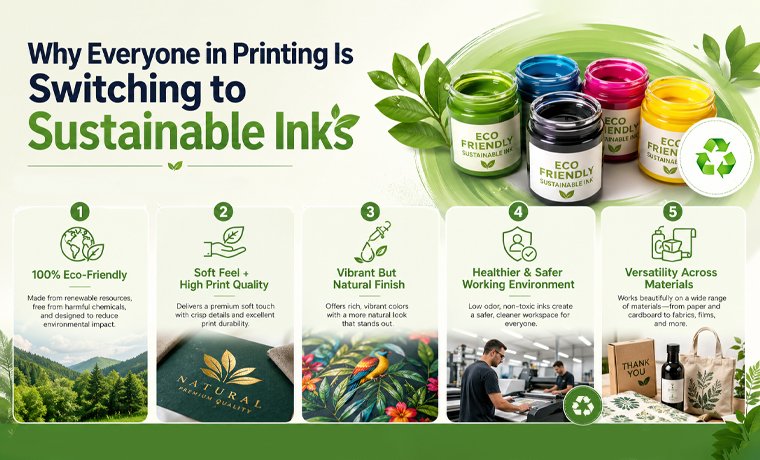
To be honest, the printing business used to be somewhat "chemical-heavy." However, water-based inks are at the forefront of the current green brand movement.
Fact: It is estimated that the global market of water-based inks will continue to grow at a compound annual growth rate (CAGR) of about 7.5% until 2030, when it is estimated to be worth about 11.14 billion. According to the Water-Based Inks Market Size Report, 2024- 2030, the industry size is 53,394.44 million in 2030.
100% Eco-Friendly
The inks based on water release fewer VOCs compared to solvent-based inks. Reduced VOC emissions result in cleaner air, fewer regulatory concerns, and a decreased carbon footprint. In simpler words, they don’t mess up the planet while making your packaging look pretty. Also, this is extremely important to brands subject to EPA or EU packaging standards. It is deemed compatible with paper bags as well.
Soft Feel + High Print Quality
Since the ink based on water can be absorbed into a cloth instead of being deposited on it, you get prints that are like an extension of the garment; it does not feel like a sticker on a garment. Also, it brings the following benefits to premium apparel designs:
- Easy to breathe finishes that complement athletic and high-quality fashion.
- The color output is bright and clear with refined details.
- No high-maintenance washing.
- No cracks or peels, even after repeated use.
Vibrant But Natural Finish
Neon plastic gloss is not a hallmark of water-based inks. Rather, they provide:
- Semi-matte or smooth matte finish
- Natural color mixing
- Rich yet delicate tones
Ideal for companies seeking a minimalist, organic, or classy look.
Healthier & Safer Working Environment
The inks used in solvents emit gases during printing and dry out. Water-based inks don't. This saves the workers from long-term exposure to chemicals and provides the end product with a safer environment for the consumer. This is especially crucial when it comes to children's clothing, food packaging, and medical labelling.
Versatility Across Materials
The water-based formulations that are currently used are surprisingly versatile. Cotton to coated paper, corrugated board, and flexible film - the right formulation is all about it. Flexo printing ink and block printing ink are water-based inks that have been specifically developed to be used with either the substrate or the process.
Read more: Flexography Printing Explained: Benefits, Process, Applications, and Eco-Friendly Impact
Applications of Water-Based Inks Across Industries
Because of their eco-friendliness, safety, and versatility, water-based inks are becoming the preferred choice in many different industries.
They are frequently used in the packaging sector to print on food boxes, paper bags, corrugated boxes, and kraft packaging, particularly when low toxicity and adherence to safety regulations are crucial.
T-shirt, hoodie, and tote bag printing in the textile and garment industry is dominated by water-based inks. These inks are also widely used in the sticker industry for green branding, bottle wraps, and product labels. They are also a safe and legal choice for food and beverage packaging, pharma boxes, and cosmetic packaging.
Lastly, water-based inks provide smooth application and less environmental impact in publishing and paper printing, including books, periodicals, and stationery.
Water-Based Ink vs. Other Types of Ink
Thus, while water-based inks are superior in terms of comfort, sustainability, and branding appeal, solvent inks continue to be better in terms of durability. A detailed comparison is below.
| Feature | Water-Based | Plastisol | Solvent-Based |
| Environmental Impact | Very Low | Moderate | High |
| VOC Emissions | Minimal | Low–Moderate | High |
| Hand Feel (Fabric) | Soft, breathable | Thick, rubbery | Varies |
| Curing Process | Heat or air dry | Heat only (160°C+) | Air/chemical dry |
| Durability | High (when cured) | Very High | Very High |
| Best For | Apparel, packaging, paper | Bold apparel graphics | Industrial, non-porous |
| Worker Safety | Excellent | Fair | Poor |
| Regulatory Compliance | Easiest | Moderate | Most Restricted |
How to Get Water-Based Ink Out of Clothes?
As long as the ink is wet, the quickest action is to:
- Use cold water on the back of the cloth to drive the ink out of the back of the cloth, as opposed to the ink being drawn in.
- Then add liquid dishwashing soap or laundry detergent, rub it into the stain, and again rinse.
- Now, wash normally.
To clean up water-based ink stains:
- First, wet with warm water (not hot water).
- Apply a colorless stain remover for 15-30 minutes.
- Then wash.
Conclusion
Water-based ink has developed as an eco-alternative niche product to become the printing industry standard. How? It produces smooth, colourful prints. It safeguards the workers and consumers against toxic chemicals. It easily meets the regulatory requirements. And it puts your brand on the correct side of the market trend!
You can operate a high-volume flexo packaging line, open a boutique screen printing studio, or even consider hand-crafted block prints. There is a water-based ink formulated to suit your purpose.
With the appropriate materials, professional procedures, and outcomes that speak for themselves, we at Custom Product Packaging deliver boxes printed with sustainable ink, be it soy-based, water-based, or more. Ready to talk? Call 888-511-0592 today!